Spotting nature recovery in Thirlmere
- peterwalter2
- Jul 2, 2024
- 2 min read
Without a ‘trained’ eye it’s easy to miss much of the incredible nature-recovery work going on in the Lake District. I spent a day with Isaac Johnston from the John Muir Trust being inspired by the numerous elements of the Thirlmere Resilience Project – in an area I had visited many times before. As with every major project in the Park this is a partnership – this time between United Utilities (who own the land), the John Muir Trust, West Cumbria Rivers Trust, Cumbria Wildlife Trust, Lancaster University and Natural England.

Storm Desmond in December 2015 caused significant damage to large areas of the catchment, with huge volumes of sediment being dumped into the reservoir putting the water supply for 700,000 customers at risk. The storm also damaged vital infrastructure across the county, and many homes and businesses were flooded. It’s in UU’s interest, therefore, to ‘slow the flow’: to protect this crucial water supply, while delivering numerous other benefits for nature, climate and communities.
The most obviously visible work is the tree planting. Over 4,000 trees have been planted with plans for many more, but saplings fight an uphill battle against grazing sheep and deer. Areas are fenced off, 10mx10m ‘pens’ are created and tree-guards are used, but an excess of deer still manage to cause significant damage. If we want more trees, we need fewer deer. Sheep still play a part in this landscape but the numbers have been reduced significantly from 2,000 a few years ago to 500 now. A tree nursery in the farm-yard will go a small way to supplying saplings but thousands more are needed. In fact, there is a structural flaw in a nationwide plan to plant millions of trees – we don’t currently have a plan to grow a fraction of the saplings we will need to meet tree-planting targets.


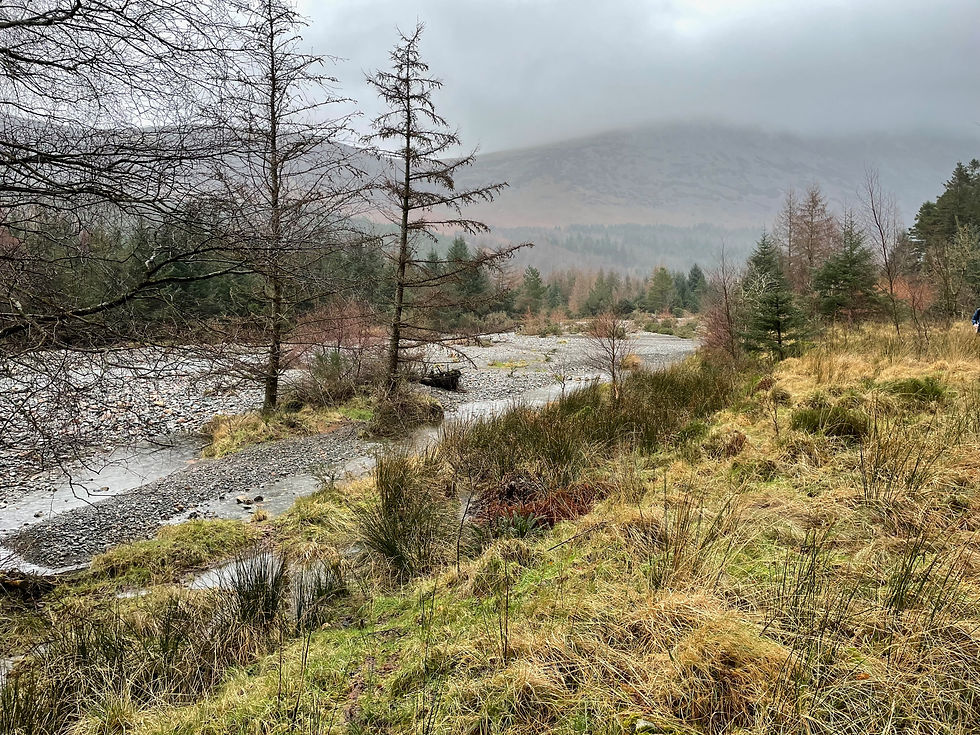
Less obvious to the eye are some of the river interventions. In a few places creating a seemingly minor break in some the bank-side ‘canalisation’ has allowed the river to behave far more naturally, creating improved conditions for wildlife and greater flood resilience.


Higher up on the fells amazing work is being done to restore peat bogs. Healthy peat bogs are a small miracle. Over thousands of years peatlands have sequestered carbon which is now locked away and stored in the form of peat. Peatlands in poor condition (which most are) are at risk of releasing huge amounts of CO2 back into the atmosphere. Healthy bogs, as well as storing carbon, hold huge amounts of water which prevents flooding downstream and improves water quality. So, to restore degraded bogs in the Thirlmere catchment historical drainage channels have been blocked, peat ‘hags’ reprofiled and leaky dams built, delivering multiple benefits for everyone.
The Thirlmere Resilience Project shows what can be achieved when different partners work together. There is so much more work needed but this is just one of many exciting projects in the Lake District National Park.
Finally, thanks to Friends of the Lake District for organising the day as part of their Leaders Landscape Training programme.


Comments